
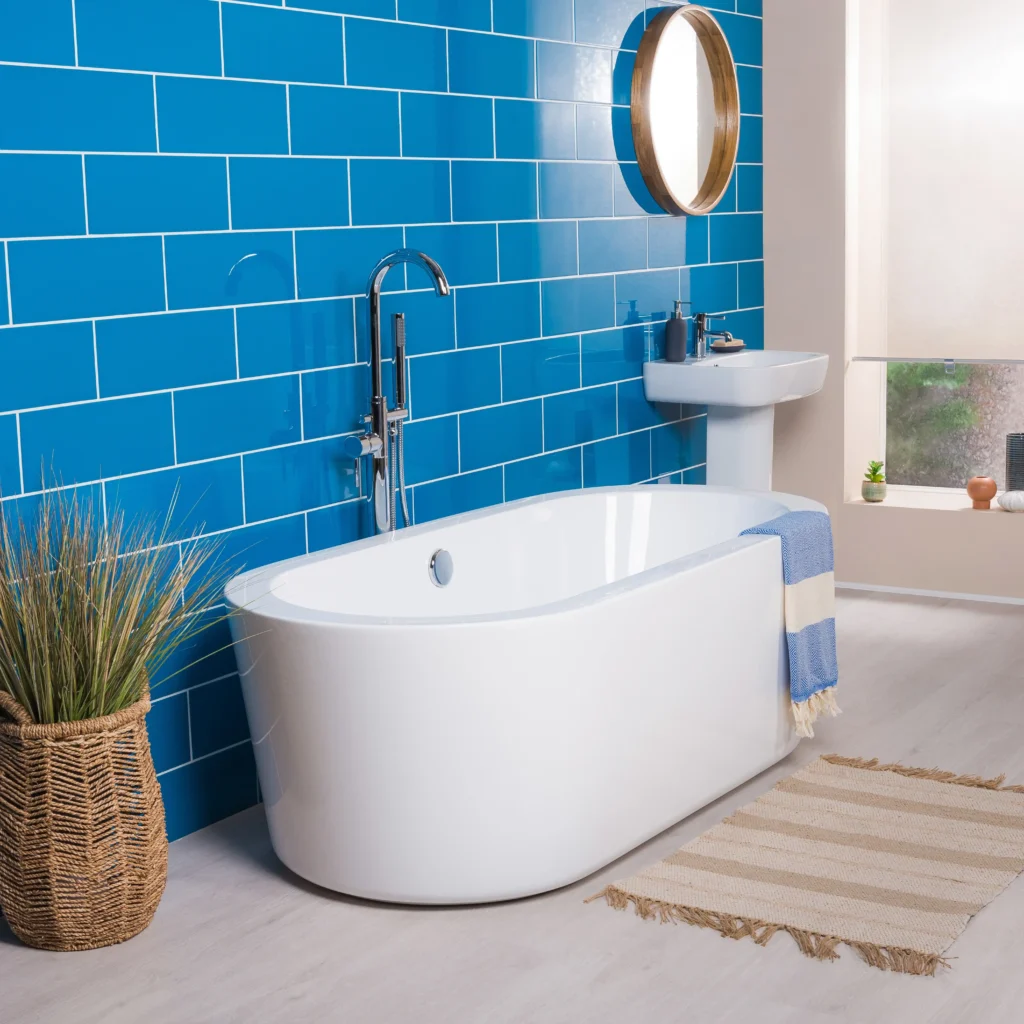
When picking a new bathtub, most people focus on style or size. But the material is just as important. It affects how long the bath lasts, how much care it needs, and what kind of bath repair is possible if something goes wrong.
Here’s a simple guide to the most common bathtub materials – cast iron, steel, acrylic, and resin – with their pros, cons, and repair options.
Cast Iron Bathtubs – Durable and Easy to Repair
Cast iron baths are heavy, traditional, and built to last for decades.
Damage risks: The enamel surface can chip or scratch, and surface rust may appear. The bath itself will never crack or suffer structural damage.
Repair options: Chips and scratches can be spot repaired, and the enamel can be fully resurfaced when it wears down.
If you want something solid and long-lasting, cast iron is the best choice for durability and straightforward bathtub repair.
Steel Bathtubs – Lighter but Prone to Rust
Steel baths are made from pressed steel, lighter than cast iron but always finished with an enamel coating.
Damage risks: They can chip and scratch, and if rust isn’t repaired quickly it can spread into the metal. Poor installation may also cause the steel to bend, leading to hairline cracks in the enamel.
Repair options: Chips and scratches can be spot repaired. Rust can usually be fixed if treated in time, and the surface can also be resurfaced.
Steel is a good choice if you want something lighter, but it needs proper fitting and regular attention to avoid costly bath repair later.
Acrylic Bathtubs – Affordable and Repairable
Acrylic (often reinforced with fibreglass) is a popular choice because it’s budget-friendly and warm to the touch.
Damage risks: Acrylic baths are easier to chip, scratch, or crack than metal ones. Holes and burns (from candles or heat) are also common.
Repair options: Chips and scratches can be spot repaired. Cracks and holes can also be repaired, and the entire surface can be resurfaced if it becomes dull.
If you’re looking for a practical option that can still be fixed when damage happens, acrylic works well – though it may need bathtub repair more often than steel or cast iron.
Resin Bathtubs – Stylish but High-Maintenance
Resin baths are modern and often have a smooth matt finish.
Damage risks: They can chip, scratch, or crack – sometimes without much impact. They are also flammable, so candles nearby are a bad idea. Their matt finish makes repairs harder to blend in.
Repair options: Chips and scratches can be spot repaired. Cracks can also be repaired, and resurfacing is possible if the bath has heavy wear.
Resin looks stylish, but it can be more challenging when it comes to bath repair, especially if you want invisible results.
Bathtub Repair Comparison
Cast Iron
Common problems: Chips, scratches, surface rust
Spot repair: Yes
Crack repair: Not needed
Resurfacing: Yes
Rust risk: Only surface
Steel
Common problems: Chips, scratches, bending, rust
Spot repair: Yes
Crack repair: Rare
Resurfacing: Yes
Rust risk: Yes
Acrylic
Common problems: Chips, scratches, cracks, holes, burns
Spot repair: Yes
Crack repair: Yes
Resurfacing: Yes
Rust risk: No
Resin
Common problems: Chips, scratches, cracks, finish wear
Spot repair: Yes
Crack repair: Yes
Resurfacing: Yes
Rust risk: No
Final Thoughts – Which Bathtub Is Best?
Every bathtub material has repair options, but some are tougher than others:
Cast iron – strongest and longest-lasting, with easy spot repairs and resurfacing.
Steel – lighter but prone to rust if damaged.
Acrylic – affordable and repairable, though less durable overall.
Resin – stylish but harder to repair neatly.
If you want maximum durability with simple bathtub repair, cast iron is the best choice. For a lighter but still strong option, choose steel. If budget and easy fitting are your priorities, acrylic is practical. And if style is top of your list, resin delivers the look – but expect more care and maintenance.
Frequently Asked Questions About Bathtub Repair
Can all bathtubs be repaired?
Yes. Whether your bath is cast iron, steel, acrylic, or resin, chips, scratches, and cracks can usually be repaired. Even rust on steel baths can be fixed if it’s treated in time.What is resurfacing?
Resurfacing is when the entire surface of the bath is refinished, rather than just fixing a small chip. It makes an old bath look new again and works well for cast iron, steel, acrylic, and resin.Is bath repair cheaper than replacement?
Most of the time, yes. A good bath repair can extend the life of your tub by many years and costs far less than removing and replacing it.How long does a bathtub repair last?
A professional bathtub repair can last for many years if it’s looked after properly. Avoid harsh cleaners and heavy knocks to keep the repaired area in good condition.

Bathtub Repair Services
If you are looking for expert bath repair service, fill out the form below for a free estimate.